Pakistan, Uzbekistan agrees to develop cooperation under “Vision Central Asia”
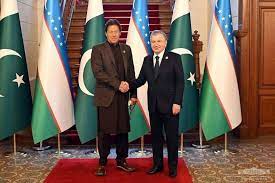
Islamabad: Pakistan and the Republic of Uzbekistan have agreed to develop institutionalized cooperation within the five main pillars of Pakistan’s “Vision Central Asia” political and diplomatic, trade and investment, energy and connectivity, security and defense and people-to-people relations.
According to the Joint declaration issued by the Prime Minister Secretariat that the President of the Republic of Uzbekistan Shavkat Mirziyoyev paid a state visit to the Islamic Republic of Pakistan on March 3-4, 2022 at the invitation of the Prime Minister of Pakistan Imran Khan.
The Leaders of the two countries held comprehensive consultations and considered all aspects of bilateral relations, paying special attention to the development of cooperation in the trade and economic sphere, science and technology, culture, education, security and defence and regional connectivity.
Emphasizing the centuries-old historical, religious, cultural and scientific ties between the two peoples and based on previously reached agreements, the parties agreed to further deepen and expand strategic partnership in all areas and in this context, decided to conclude a treaty on strategic partnership.
The Leaders also exchanged views on issues of global and regional importance, intensifying contacts in international forums, including within the framework of the United Nations, Organization of Islamic Cooperation, Shanghai Cooperation Organization and Economic Cooperation Organization.
The two Leaders also reaffirmed their commitment to close interaction based on common positions and to continue the practice of mutual support at international and regional forums on all issues of mutual interest.
The Joint declaration states that PM Imran Khan congratulated the President of Uzbekistan on the chairmanship of the Shanghai Cooperation Organization (SCO) and the Economic Cooperation Organization (ECO) in 2022 and expressed Pakistan’s full support for Uzbekistan’s activities within the SCO and OIC, including the holding of the SCO Summit in the second half of 2022.
On the other hand, the President of the Republic of Uzbekistan Shavkat Mirziyoyev expressed the readiness to provide support to Pakistan’s initiative to create a poverty alleviation mechanism during the period of Uzbekistan’s chairmanship in the SCO.
The two leaders agreed to expand cooperation between the parliamentary bodies, exchange visits of the leaders of the Senate and the National Assembly of Pakistan and the Legislative Chamber and the Senate of the Oliy Majlis of the Republic of Uzbekistan and hold meetings between the established inter-parliamentary groups of friendship and cooperation.
besides, both Leaders welcomed the signing of the Preferential Trade Agreement between Uzbekistan and Pakistan and the entry into force of the Transit Trade Agreement. These agreements are the sign of the beginning of a new era in bilateral trade relations and will serve to increase mutual trade by utilizing existing opportunities.
The Leaders reaffirmed the important role of the Termez-Mazar-e-Sharif-Kabul-Peshawar railway project for the future of the region. It was agreed to evolve a joint “Road Map”, which includes measures to develop a feasibility study for the project and start construction work on both sides. They acknowledged that the Trans-Afghan Railway project is the most economical and shortest route connecting Central Asia with Pakistan’s ports of Karachi, Gwadar and Qasim.
The Leaders expressed deep concern about the continuing trend of Islamophobia. Supporting the efforts of the Organization of Islamic Cooperation to mark the International Day against Islamophobia on 15 March, the sides agreed to cooperate in the UN General Assembly.
The Leaders agreed to continue providing humanitarian assistance to Afghanistan and emphasized that peace and stability in Afghanistan are essential to advance connectivity agenda which will lead to regional prosperity.
The importance of economic assistance to Afghanistan and the un-freezing of Afghan foreign bank reserves was also stressed.
Ends