All the records broken during FIFA World Cup 2026
Talha Javed:
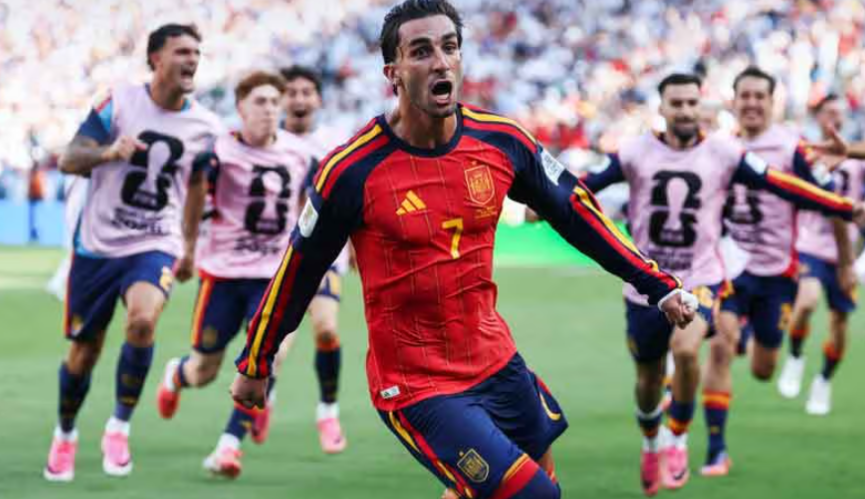
Lahore: The FIFA World Cup 2026 concluded with Spain defeating Argentina 1-0 after extra time to lift their second world title at New York New Jersey Stadium.
Beyond Spain’s triumph, the first-ever 48-team tournament will be remembered for unprecedented attendance, record-breaking performances and several historic milestones that reshaped the World Cup record books.
Spain sealed the FIFA World Cup trophy with a 1-0 victory over defending champions Argentina after extra time in front of a packed crowd at New York New Jersey Stadium.
The tournament, jointly hosted by the United States, Canada and Mexico, featured the World Cup’s first expanded 48-team format, resulting in more matches, more goals and more records than ever before.
Despite the larger field, football’s traditional powers once again dominated the latter stages, with FIFA’s top four-ranked teams—Spain, Argentina, France and England—all reaching the semi-finals.
World Cup 2026 rewrites record books
The tournament produced numerous historic milestones that may stand for years.
Among the biggest records were:
Most FIFA World Cup appearances: Lionel Messi and Cristiano Ronaldo became the first men’s players to feature in six World Cup tournaments.
First player to score in six different World Cups: Cristiano Ronaldo.
Oldest player to score multiple goals in a World Cup match: Cristiano Ronaldo.
Smallest nation ever to qualify for a FIFA World Cup: Curaçao.
Most red cards in an opening World Cup match: Mexico vs South Africa, with three dismissals.
Most-attended FIFA World Cup in history.
Highest-scoring FIFA World Cup ever held.
The expanded tournament format created more opportunities for teams and players to leave their mark on football history.
Underdogs capture imagination
Although the established football giants dominated the knockout rounds, several smaller nations produced memorable performances.
Tournament debutants Cape Verde became one of the competition’s biggest surprise packages. The team of journeymen professionals and emerging young players earned impressive draws against Spain and Uruguay before pushing eventual finalists Argentina into extra time.
Norway also won widespread praise with their entertaining attacking football, nicknamed the “Viking roar,” as they reached the World Cup quarter-finals for the first time in their history.
United States wins over visiting fans
Before the tournament began, concerns over visa policies, gun violence and whether American audiences would embrace football created uncertainty around the United States as a host nation.
However, those fears largely faded as international supporters praised the hospitality they received across the country.
The tournament became affectionately known online as the “Great American Sleepover,” with social media flooded by posts showing Americans embracing football traditions brought by visiting fans—including early-morning bagpipe performances—while European supporters enthusiastically discovered American free soda refills.
Co-host Canada also emerged as one of the tournament’s success stories.
The Canadian national team reached the Round of 16, highlighting the country’s growing investment in football and attracting record attendances that many believe will accelerate the sport’s development at home.
Mixed legacy for Mexico
Mexico once again demonstrated its passion for football, with stadiums packed and supporters creating vibrant atmospheres throughout the tournament.
The country’s first World Cup knockout-stage victory in 40 years sparked nationwide celebrations but also tragedy, as four people died in crowd crushes.
Despite the successful hosting of matches, analysts noted there was little evidence of any lasting economic benefit for Mexico.
USA exit disappoints home supporters
American fans were left frustrated after the United States was eliminated in the Round of 16 once again.
The tournament also featured controversy involving US President Donald Trump, who intervened following the suspension of striker Folarin Balogun after a red card in the group stage.
Balogun’s suspension was reduced, allowing him to play in the Round of 16 defeat to Belgium, but the decision ultimately had little impact on the team’s World Cup campaign.
In the end, observers concluded that the United States largely performed in line with pre-tournament expectations.
Ticket prices spark debate
One of the biggest criticisms throughout the tournament centred on the rising cost of attending World Cup matches.
Ticket prices were significantly higher than in previous editions, prompting concerns that the tournament had become increasingly inaccessible for ordinary supporters.
Nevertheless, stadium attendance remained exceptionally high, suggesting many fans were still willing to pay premium prices.
Critics argued, however, that attending the World Cup is increasingly becoming an experience reserved for affluent supporters or the most dedicated football followers.
Beyond financial barriers, supporters from countries facing visa restrictions also struggled to attend matches.
Diaspora communities already living in North America, along with local American supporters adopting foreign teams, helped fill stadiums and maintain vibrant atmospheres throughout the tournament.
Although FIFA regulations prohibit political demonstrations inside stadiums, several political displays occurred during the tournament.
Authorities generally did not intervene immediately, allowing matches and events to continue without disruption.
American innovations divide opinion
The tournament also introduced several American-style elements that divided football supporters.
Hydration breaks and an extended halftime entertainment show during the World Cup final drew criticism from traditionalists, who argued the interruptions disrupted football’s natural rhythm and primarily created additional advertising opportunities.
Others, however, noted that coaches successfully used the hydration breaks for tactical adjustments.
With global temperatures continuing to rise, many observers believe such innovations could become a permanent feature of future international tournaments.
World Cup that blended tradition with change
The 2026 FIFA World Cup successfully combined football tradition with a new expanded format that produced more goals, record crowds and unforgettable moments.
From Cristiano Ronaldo and Lionel Messi making history to surprise performances by Cape Verde and Norway, and from record-breaking attendance to debates over ticket prices and tournament innovations, the competition left a lasting impact on the global game.
As Spain celebrated becoming world champions once again, the tournament also signaled a new era for football—one defined by expansion, innovation and records that may stand for generations.