Trump threatens to ‘blow up’ Oman over Hormuz dispute
Tos:
Islamabad:US President Donald Trump appeared to threaten military force against Oman after rejecting reports of an imminent deal that would allow Iran and Oman to jointly manage traffic through the Strait of Hormuz.
Speaking at a White House cabinet meeting, Trump said the strategic waterway would remain open to all and insisted that “nobody” would control it.
Before the latest US strikes, Trump dismissed an Iranian report claiming that a deal was close on the Strait of Hormuz. The report said Iran and Oman could jointly manage traffic through the key waterway, which handles more than 20 percent of global oil traffic.
Trump said no single country would have control over the strait. “Nobody’s going to control it,” Trump said.
“It’s international waters and Oman will behave just like everybody else or we’ll have to blow them up. They understand that, they’ll be fine.”
The remarks came after a reporter asked Trump whether he would accept a short-term agreement allowing Iran and Oman to control the strait. Trump rejected the idea immediately.
“No, the strait is going to be open to everybody,” he told reporters during the cabinet meeting.
He added: “Nobody is going to control it. It’s international waters, and Oman will behave just like everybody else, or we will have to blow them up.”
State Dept names Oman
There was initial speculation that Trump may have misspoken and intended to say “Iran” instead of “Oman.”
However, the US State Department later shared a clip and transcript of Trump’s remarks on social media, referring to the Arab country without correction or clarification.
Oman has not said it wants to control Hormuz
Oman, known for its neutrality, has not said it wants to join Iran in controlling the Strait of Hormuz. The Gulf country has long maintained close relations with the United States.
The US-Oman relationship stretches back more than 200 years and includes multiple cooperation treaties, security partnerships, a free trade agreement and a science and technology deal.
Oman has played a mediation role between Washington and Tehran as both sides searched for a resolution to the war. The conflict began on February 28, when the United States and Israel attacked Iran.
Oman has also reportedly come under attack from Tehran during the wider conflict. The Gulf nation has a population of around 5.3 million people and has decades-long military and economic ties with Washington.
Strait remains central to global energy crisis
The Strait of Hormuz typically carries about one-fifth of the world’s oil supplies. The waterway has been largely blocked or severely disrupted since late February, triggering a global energy crisis and raising pressure on Washington to reopen the route.
Trump said the strait must remain open to everyone.
“The strait is going to be open to everybody,” he said. “Nobody’s going to control it. We’re going to watch over it. We’ll watch over it. But nobody’s going to control it. That’s part of the negotiation that we have.”
Iran reportedly seeks toll mechanism
Iran has indicated it wants to impose a new reality in the Strait of Hormuz. Reports citing regional officials said Tehran wants Oman to support a mechanism to collect tolls from vessels passing through the strait and share the revenues.
Iranian state television also reported on the framework of a memorandum of understanding between Iran and Oman. The reported draft would have given Iran and Oman joint control to manage the waterway.
The Trump administration called the report “a complete fabrication.”
Trump says Iran stalling talks
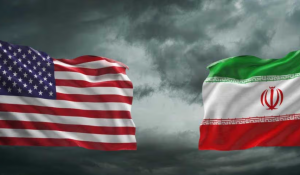
Trump’s threat came as efforts to strike a peace deal with Iran appeared to stall. The president has grown increasingly frustrated as talks to end the Middle East war and reopen the Strait of Hormuz failed to produce a final agreement.
Just days earlier, Trump had said a deal was near.
During the cabinet meeting, he accused Iran of trying to delay the agreement and “outwait me” until the November midterm elections in the United States.
When Trump signalled over the weekend that he was close to a deal with Iran, some Republican hawks issued a rare rebuke. Those lawmakers had strongly supported his controversial decision to order war on Iran alongside Israel.
Their criticism reflected growing unease within parts of Trump’s party over the terms of any possible agreement.
Trump urges Arab states to normalise ties with Israel
During Wednesday’s cabinet meeting, Trump also repeated his call for Arab countries, including Saudi Arabia and Qatar, to establish formal relations with Israel.
He said normalization through the Abraham Accords should be part of any future US-Iran ceasefire arrangement.
Trump’s apparent threat against Oman underscored what critics describe as his increasing reliance on military pressure in foreign policy, a strategy sometimes referred to as “gunboat diplomacy.”
Trump’s remarks also followed another apparent verbal mix-up. The 79-year-old president earlier appeared to confuse Iran and Venezuela, saying the South American country — whose leader Nicolas Maduro was toppled by US forces in January — “no longer has a navy, no longer has an air force.”
Trump has repeatedly used similar language to describe Iran, which the United States and Israel attacked on February 28.